Homeowner application guide
The A–B–C system.
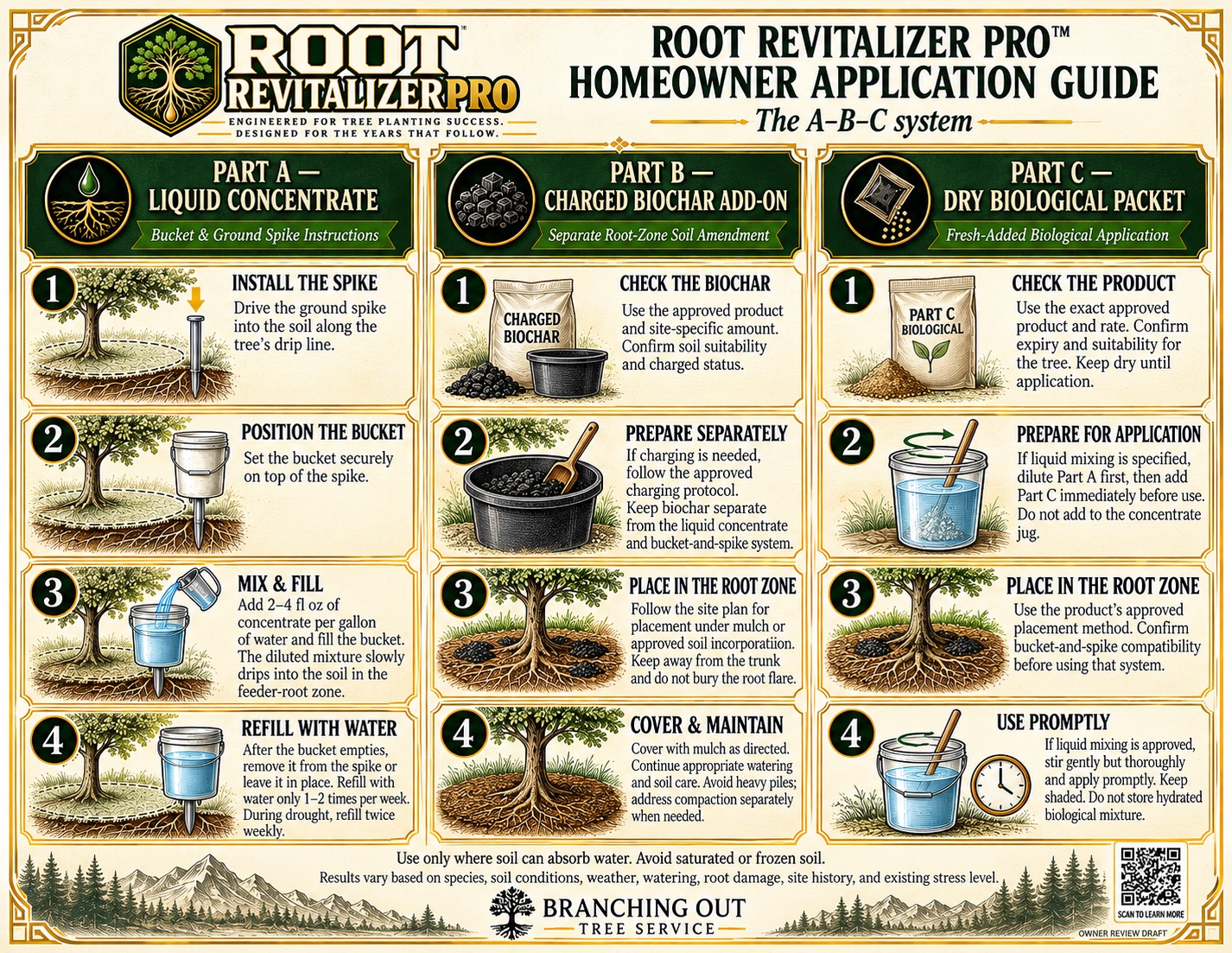
Part A is the liquid concentrate. Part B is the separate charged biochar add-on. Part C is the dry biological packet. Follow the exact product’s approved directions and the site plan.
Download the instruction brochureBefore you begin
Quick-start checklist.
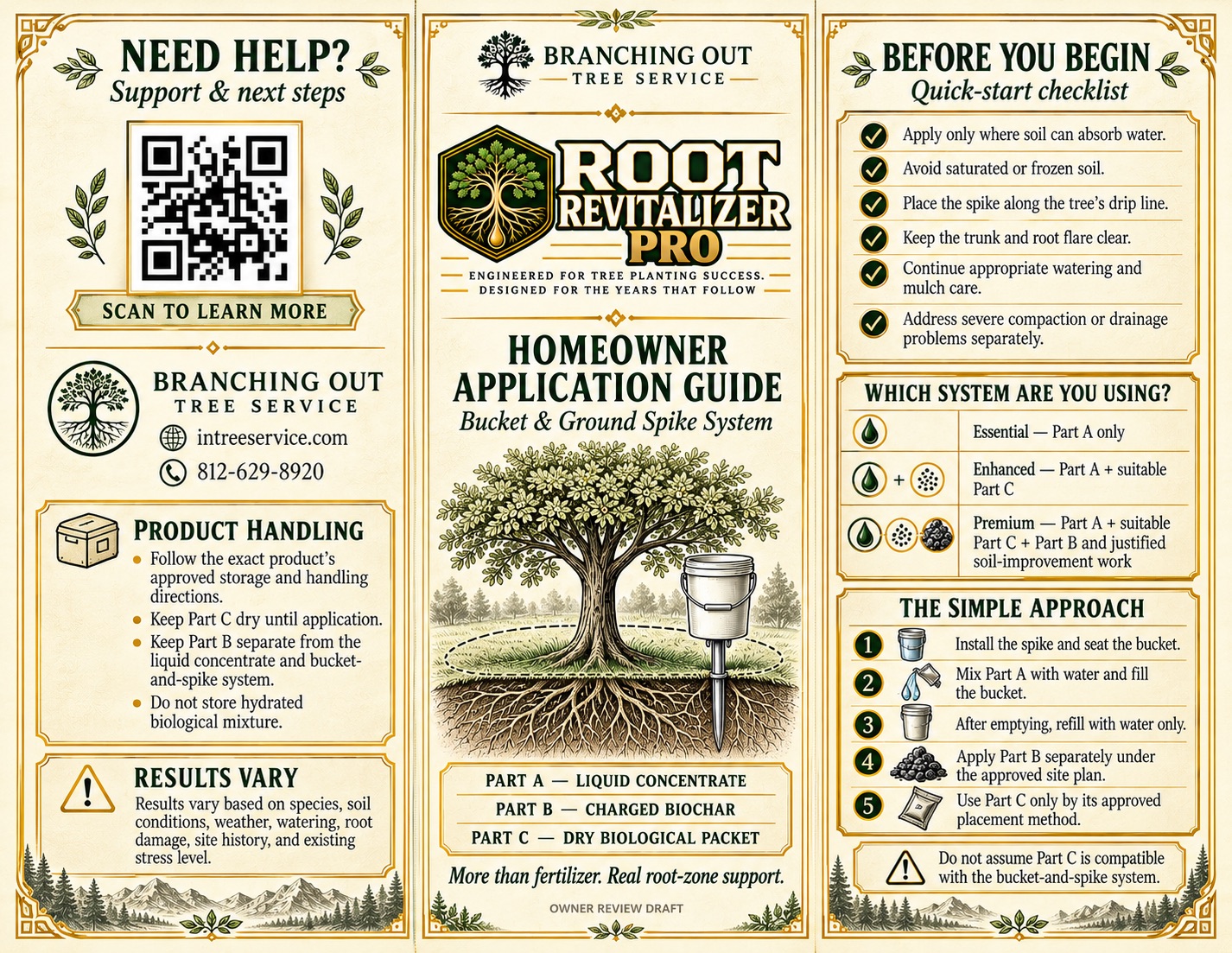
- Apply only where soil can absorb water.
- Avoid saturated or frozen soil.
- Place the spike along the tree’s drip line.
- Keep the trunk and root flare clear.
- Continue appropriate watering and mulch care.
- Address severe compaction or drainage problems separately.
Do not assume Part C is compatible with the bucket-and-spike system. Confirm compatibility in the exact product’s approved directions.
Part A · Bucket & ground spike instructions
Liquid concentrate
Install the spike
Drive the ground spike into the soil along the tree’s drip line.
Position the bucket
Set the bucket securely on top of the spike.
Mix & fill
Add 2–4 fl oz of concentrate per gallon of water and fill the bucket. The diluted mixture slowly drips into the soil in the feeder-root zone.
Refill with water
After the bucket empties, remove it from the spike or leave it in place. Refill with water only 1–2 times per week. During drought, refill twice weekly.
Use only where soil can absorb water. Avoid saturated or frozen soil.
Open the full-size Part A instructions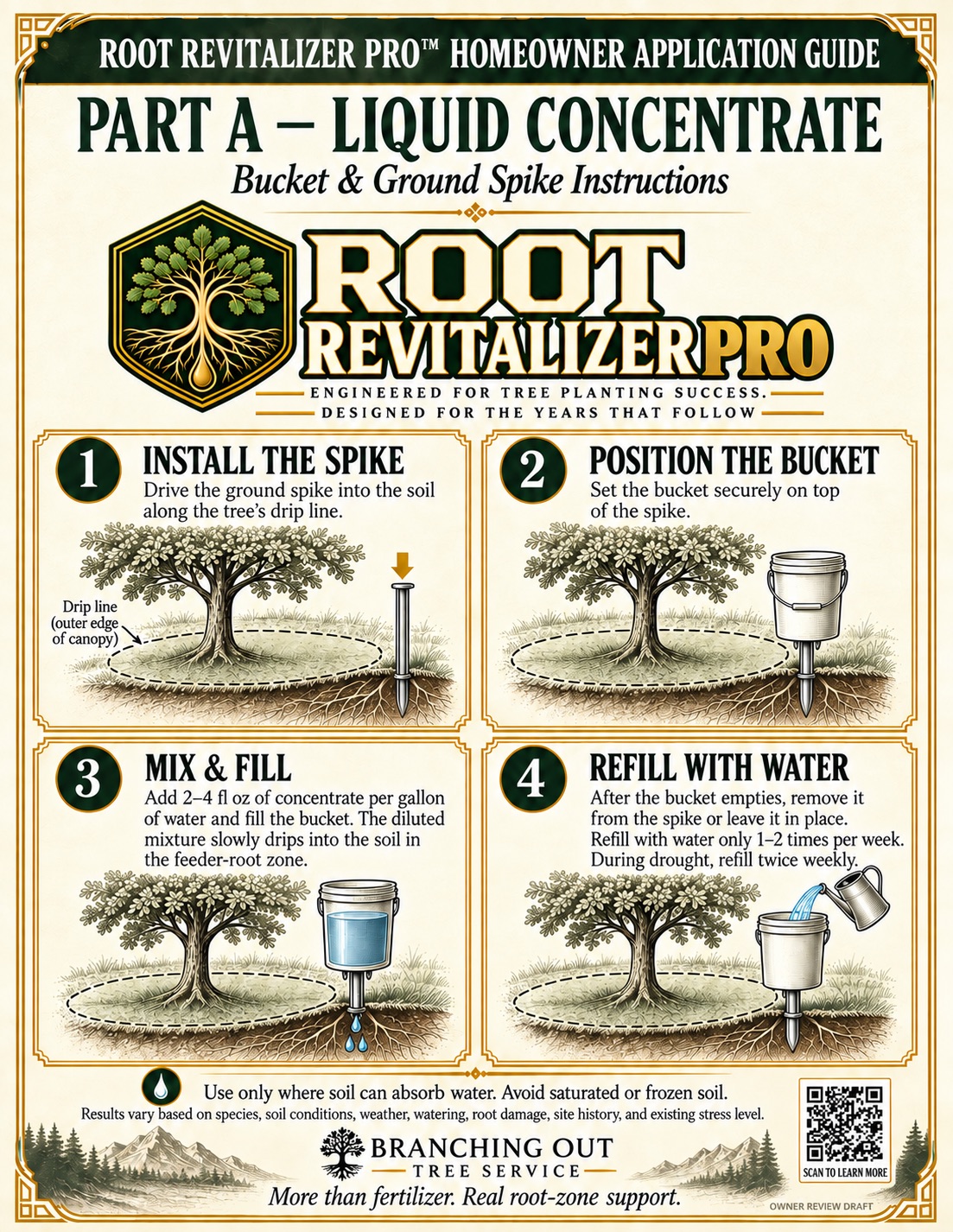
Part B · Separate root-zone soil amendment
Charged biochar add-on
Check the biochar
Use the approved biochar product and site-specific amount. Confirm soil suitability and charged status before application.
Prepare separately
If charging is needed, follow the approved charging protocol. Keep biochar separate from the liquid concentrate and bucket-and-spike system.
Place in the root zone
Follow the site plan for placement under mulch or approved soil incorporation. Keep away from the trunk and do not bury the root flare.
Cover & maintain
Cover with mulch as directed. Continue appropriate watering and soil care. Avoid heavy piles; address compaction separately when needed.
Follow the approved protocol for charging, amount, treated area and incorporation depth.
Open the full-size Part B instructions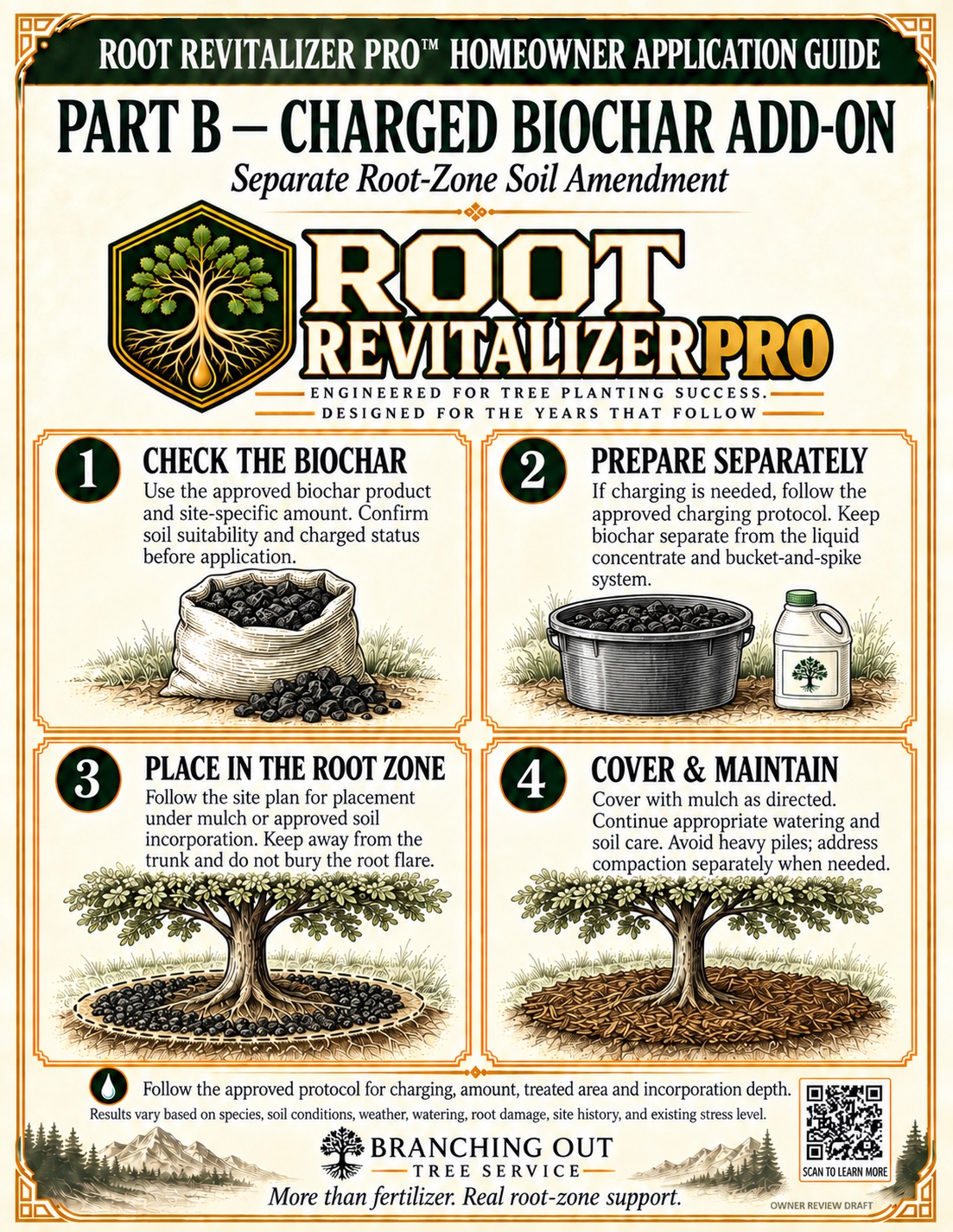
Part C · Fresh-added biological application
Dry biological packet
Check the product
Use the exact approved Part C product and rate. Confirm expiry and suitability for the tree. Keep dry until application.
Prepare for application
Follow the approved product directions. If liquid mixing is specified, dilute Part A first, then add Part C immediately before use. Do not add to the concentrate jug.
Place in the root zone
Use the product’s approved placement method to reach the active root zone. Confirm bucket-and-spike compatibility before using that system.
Use promptly
If liquid mixing is approved, stir gently but thoroughly and apply promptly. Keep shaded and out of extreme heat. Do not store hydrated biological mixture.
Follow the approved product directions for the exact rate and application method.
Open the full-size Part C instructions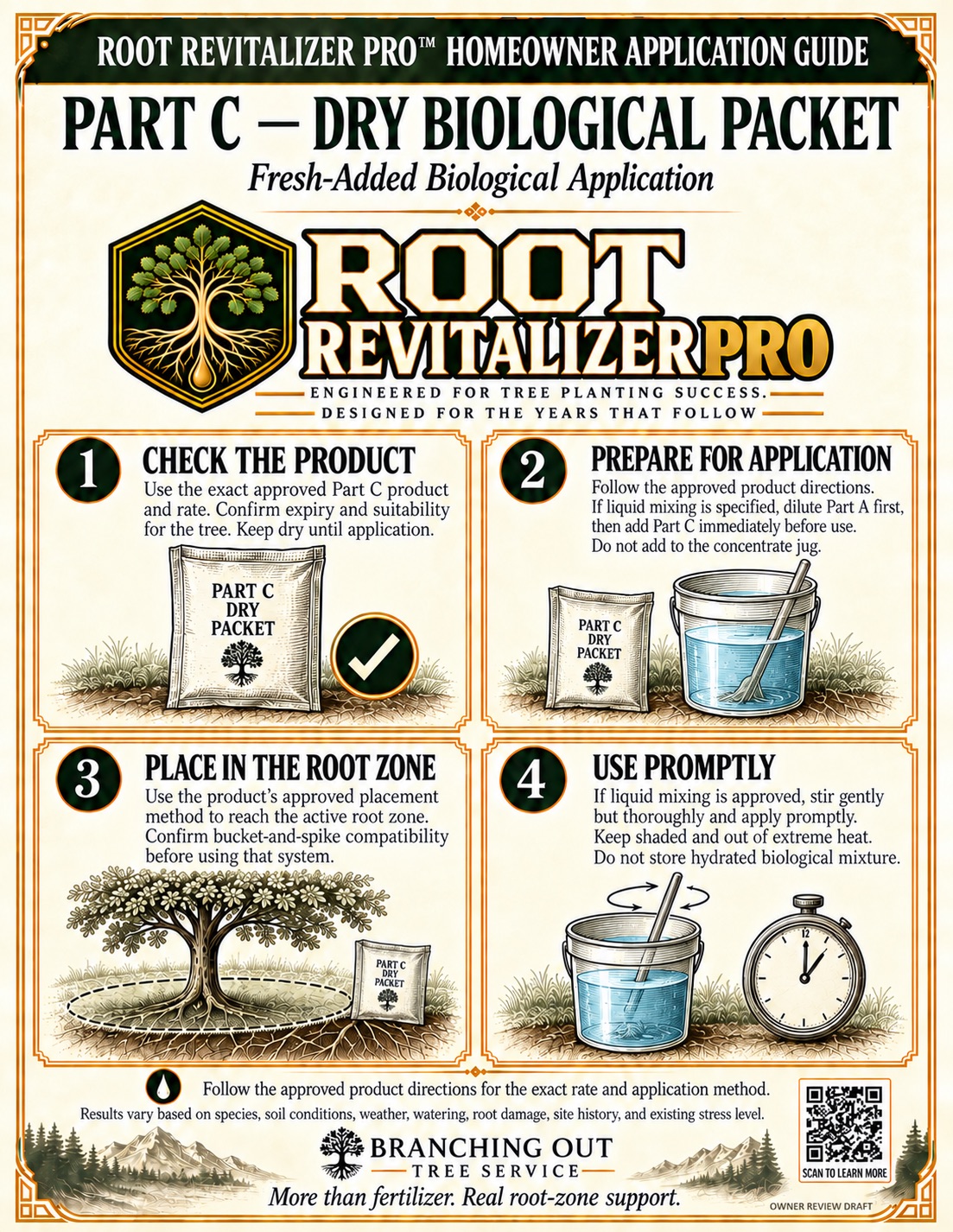 Download all three instruction sheets
The homeowner brochure
Keep the guide handy.
The two-sided guide brings the A–B–C instructions together with the quick-start checklist, product handling and support information.
Download the brochureProduct handling
- Follow the exact product’s approved storage and handling directions.
- Keep Part C dry until application.
- Keep Part B separate from the liquid concentrate and bucket-and-spike system.
- Do not store hydrated biological mixture.
Results vary based on species, soil conditions, weather, watering, root damage, site history, and existing stress level.